Why 8 Matchdays Reshape the 2026 Champions League
The 2026/27 UEFA Champions League fixtures begin with league-phase Matchday 1 on 8 September 2026 and conclude with the final at Madrid’s Estadio Metropolitano on 5 June UEFA’s competition includes 36...

Why 8 Matchdays Reshape the 2026 Champions League
The 2026/27 UEFA Champions League fixtures begin with league-phase Matchday 1 on 8 September 2026 and conclude with the final at Madrid’s Estadio Metropolitano on 5 June 2027. UEFA’s competition includes 36 clubs, eight league-phase matchdays, and a new-style table in which every team plays eight opponents rather than entering a traditional four-team group. Confirmed or provisional participants include Real Madrid, Barcelona, Manchester City, Liverpool, Bayern München, Paris Saint-Germain, Inter, Arsenal, Atlético de Madrid, and Borussia Dortmund. The league phase runs through 27 January 2027, followed by knockout play-offs in February, the round of 16 in March, quarter-finals in April, and semi-finals in April and May. Kick-off times, club admission, and individual pairings can still change, so save the dates provisionally and verify every fixture through UEFA before planning travel, wagers, or watch parties.
Imagine checking a fixture page after midnight, finding a dazzling list of dates, and then noticing one tiny word: provisional. That word matters. Scam sites can make invented information look official, so the competition organizer, venue, and date should be checked before relying on a listing. For the 2026 Champions League fixtures, UEFA is the authority; Stadium View can add match context, predictions, tactical notes, and player-stat analysis, but it should not replace the official schedule. The official schedule remains the reference.

Photo by hayati ilker ergün on Pexels
Want a clearer tournament roadmap before the schedule becomes crowded? Stadium View follows the 2026 World Cup and major football competitions with daily analytical coverage.
The Bottom Line
The 2026 Champions League league phase starts on 8 September 2026, uses eight matchdays, and ends on 27 January 2027; the 2027 final takes place at Estadio Metropolitano in Madrid on 5 June. The knockout play-offs are scheduled for 16/17 and 23/24 February 2027, while the round of 16, quarter-finals, and semi-finals follow in March, April, and May.
The practical answer is simple: there is no single “Champions League fixture 2026” date. There is a complete 2026/27 season calendar, and the first competitive matches may begin in July through qualifying rounds before the league phase starts in September. That distinction is where many search results become slippery. The phrase “fixtures 2026” can refer to qualifying matches, league-phase pairings, or the broader season schedule, so readers should identify the stage before making travel plans or comparing odds.
2026/27 Champions League key dates
| Stage | Scheduled date |
|---|---|
| Qualifying competition begins | 7 July 2026 |
| League-phase Matchday 1 | 8–10 September 2026 |
| Matchday 2 | 13–14 October 2026 |
| Matchday 3 | 20–21 October 2026 |
| Matchday 4 | 3–4 November 2026 |
| Matchday 5 | 24–25 November 2026 |
| Matchday 6 | 8–9 December 2026 |
| Matchday 7 | 19–20 January 2027 |
| Matchday 8 | 27 January 2027 |
| Knockout play-offs | 16/17 and 23/24 February 2027 |
| Round of 16 | 9/10 and 16/17 March 2027 |
| Quarter-finals | 6/7 and 13/14 April 2027 |
| Semi-finals | 27/28 April and 4/5 May 2027 |
| Final | 5 June 2027 |
These dates come from the published UEFA competition calendar, but UEFA notes that dates can be amended. The league-phase matchdays are particularly important because the schedule is spread across Tuesday, Wednesday, and occasionally Thursday windows, with some early kick-offs listed at 18:45 Central European Time and the standard evening slot commonly listed at 21:00 CET. A fixture displayed in CET is not automatically 21:00 in London, New York, Los Angeles, or Sydney, and that time-zone trap is one of the most common practical mistakes.
For the official competition framework, consult the UEFA Champions League website. For a broader background reference, the 2026–27 UEFA Champions League overview can help organize the terminology, although the UEFA page should take priority when the two disagree.
What Players Actually See
Players see a league phase rather than the old group-stage format: 36 clubs are placed in one table, each club plays eight different opponents, and the final standings determine who advances directly, enters the play-offs, or is eliminated. The format therefore creates a longer competitive pathway, with four home matches and four away matches assigned across the eight matchdays.
That structure changes the tactical experience. A club cannot simply target one familiar opponent twice and manage a six-game group; it must handle eight separate scouting problems, different travel demands, and a table in which goal difference and late results can become decisive. Real Madrid may approach a home match against Inter differently from an away trip involving Bayern München, while a club such as Bodø/Glimt or Slovan Bratislava may need to protect points against elite opposition without losing its attacking identity.
The league phase contains 36 clubs, but only 24 proceed to the knockout portion. The top eight qualify directly for the round of 16. Teams finishing from ninth through 24th enter the knockout phase play-offs, while clubs in positions 25 through 36 leave the Champions League and do not drop into the UEFA Europa League under this format. That last point is easy to miss and worth writing down before interpreting a table screenshot.
How the league phase affects the calendar
- Each club plays eight league-phase matches.
- Four matches are scheduled at home and four away.
- The top eight teams advance directly to the round of 16.
- Teams ranked ninth to 24th contest the knockout phase play-offs.
- Teams ranked 25th to 36th are eliminated from UEFA competition.
- The knockout play-offs are played over two legs.
- The final is a single match at Estadio Metropolitano.
Imagine the difference for a coaching staff: eight opponents, limited recovery time, and no guarantee that a strong start will remain valuable in January. Stadium View’s tactical coverage is most useful here when it connects fixture congestion with pressing intensity, squad rotation, injuries, and set-piece trends rather than treating every match as an isolated prediction.
Champions League tactical analysis and match prediction guide
The official UEFA competition regulations are the safest place to check format definitions and administrative rules. UEFA’s own schedule language also carries an important warning: “Dates are subject to change.” That is not decorative legal wording. It means a club’s fixture may move because of broadcast selection, domestic-calendar conflicts, stadium requirements, or competition administration.
Ready to compare fixtures with tactical context rather than headlines alone?
What Are the 3 Things That Matter Most?
The three most important factors are the competition stage, the verified local kick-off time, and the club’s table position. A league-phase match in September is not equivalent to a knockout second leg in February, while a 21:00 CET listing may begin at a different hour for an international audience. Finally, the difference between eighth and ninth place can determine whether a club receives direct round-of-16 qualification or must survive a two-legged play-off.
1. Identify the stage before reading the fixture
A qualifying match can take place in July or August 2026, while the league phase begins in September. Search engines often blend those schedules because both belong to the 2026/27 Champions League season. If a page lists “Champions League fixtures 2026” without labeling qualifying rounds, league phase, or knockout rounds, treat it as incomplete.
The stages have different consequences:
- Qualifying rounds: Early-season two-leg ties determine access to the league phase.
- League phase: Eight matches per club decide the table.
- Knockout play-offs: Positions ninth to 24th compete over two legs.
- Round of 16: The top eight join the play-off winners.
- Quarter-finals and semi-finals: Two-legged ties continue.
- Final: One match decides the champion in Madrid.
2. Convert CET correctly
The published fixture list commonly uses Central European Time. In September, a 21:00 CET kick-off is generally 20:00 in the United Kingdom, 15:00 Eastern Time in the United States, and 12:00 Pacific Time, although daylight-saving rules must be checked for the exact date. A 18:45 CET match is earlier still, and the conversion can affect viewers in New York, Los Angeles, Toronto, Mexico City, or Melbourne.
This sounds minor until a work break is planned around the wrong hour. A reliable time-zone service and the broadcaster’s listing can be compared when converting the time. The date after conversion should also be checked because a late European kick-off can appear on the previous calendar day in parts of North America.
3. Watch the table, not only the club names
The 2026/27 league phase rewards consistency across eight fixtures. A dramatic victory over Paris Saint-Germain or Manchester City helps, but it does not erase points dropped against a lower-ranked opponent. The top-eight line is especially important because direct round-of-16 qualification means one fewer knockout tie and a different preparation burden.
For prediction readers, table position should be combined with expected line-ups, rest days, travel distance, home advantage, and current scoring data. A famous badge is not a statistical argument. Stadium View can discuss those factors through match predictions and player statistics, but responsible readers should treat any betting information as analysis rather than certainty. Football outcomes remain uncertain, and gambling should be limited to legal, affordable activity.

Photo by RDNE Stock project on Pexels
For deeper preparation, explore our player statistics and team-form coverage before judging a fixture’s likely outcome. This is where a clean calendar becomes genuinely useful: it lets you compare opponent quality, recovery windows, and schedule pressure instead of chasing whichever club is trending that morning.
Edge Cases & Gotchas
The biggest Champions League fixture mistakes involve provisional club lists, altered kick-off times, duplicate-looking dates, and confusing league-phase standings with knockout qualification. UEFA’s published club list may be based on sporting performance but remain subject to licensing, disciplinary, or admission decisions. In addition, Russian clubs remain suspended from UEFA competitions until further notice according to the reference information, so copied lists should not be treated as permanent.
Is the published club list final?
No, a published or reported list can remain provisional until UEFA completes admission and administrative checks. The expected field includes major clubs such as Arsenal, Aston Villa, Liverpool, Manchester City, Manchester United, Barcelona, Real Madrid, Atlético de Madrid, Bayern München, Borussia Dortmund, Paris Saint-Germain, Inter, Napoli, and Roma, alongside teams such as Club Brugge, Feyenoord, PSV, Porto, Sporting CP, Galatasaray, Fenerbahçe, Shakhtar Donetsk, and Bodø/Glimt.
That mix is precisely why the 2026/27 competition should be watched carefully. It combines established European powers with clubs whose league-phase qualification may create unfamiliar away trips and different tactical matchups. However, a club’s name appearing in an early article does not prove its final admission. Check UEFA’s latest announcement, the club’s own official communication, and the competition draw before relying on the information.
Can a fixture date or venue change?
Yes. UEFA may revise a fixture date, kick-off time, or operational detail after the initial calendar is published. Domestic league scheduling, broadcast selection, security planning, stadium availability, and travel coordination can all create changes. A match listed for Tuesday may move within the approved matchday window, and a venue may require confirmation when local conditions or club arrangements change.
The safest operational habit is to verify a fixture at three points: when buying travel, during the week before the match, and on matchday. Keep the official UEFA fixture page bookmarked, and compare it with the home club’s website. A ticket-resale page, social-media graphic, or search snippet is not sufficient evidence. Sites can copy a real club crest and a fake date; a polished page can still have the wrong URL.
What does “draw” mean in the league phase?
The league-phase draw assigns eight opponents to each club, with constraints governing which clubs can meet and how national associations are represented. It does not create the old eight groups of four. The resulting schedule may show opponents distributed across multiple ranking pots, and each club receives a mixture of home and away games.
The knockout draw has different mechanics. The top eight league-phase finishers are seeded for the round of 16, while teams entering through the play-offs must first survive two legs. That difference means a club’s ranking is not merely cosmetic: finishing eighth instead of ninth can remove an extra elimination round. This is one of the most consequential details casual fixture lists leave unexplained.
Is every 21:00 listing guaranteed?
No. A 21:00 CET label is a scheduled time, not an unchangeable promise. UEFA and broadcasters can announce adjustments, and local listings may display the same fixture in a different time zone. In practical terms, fans should save the matchday and then confirm the precise kick-off through UEFA or an authorized broadcaster.
Champions League viewing times and international time-zone guide
Want a second layer of schedule checking before placing a legal wager or arranging travel?
Verdict
The 2026 Champions League fixtures are best understood as a season-long system, not a single list of glamorous matches. The league phase starts on 8 September 2026, runs through 27 January 2027, and places unusual weight on the eight-match table; the knockout play-offs begin in February, and the final returns to Madrid’s Estadio Metropolitano on 5 June 2027. Real Madrid, Barcelona, Manchester City, Liverpool, Bayern München, Paris Saint-Germain, Inter, Arsenal, and Atlético de Madrid are among the names that make the schedule compelling, but verified dates and table position matter more than reputation.
My recommendation is to build a personal fixture tracker with five columns: stage, date, local time, venue, and source checked. Add a sixth column for last confirmation, because that small habit exposes outdated pages quickly. Use Stadium View for predictions, tactics, team form, and player statistics, then confirm the underlying fixture through UEFA. It is less exciting than trusting a dramatic social post, but it is far safer. The safer approach is to verify the schedule.
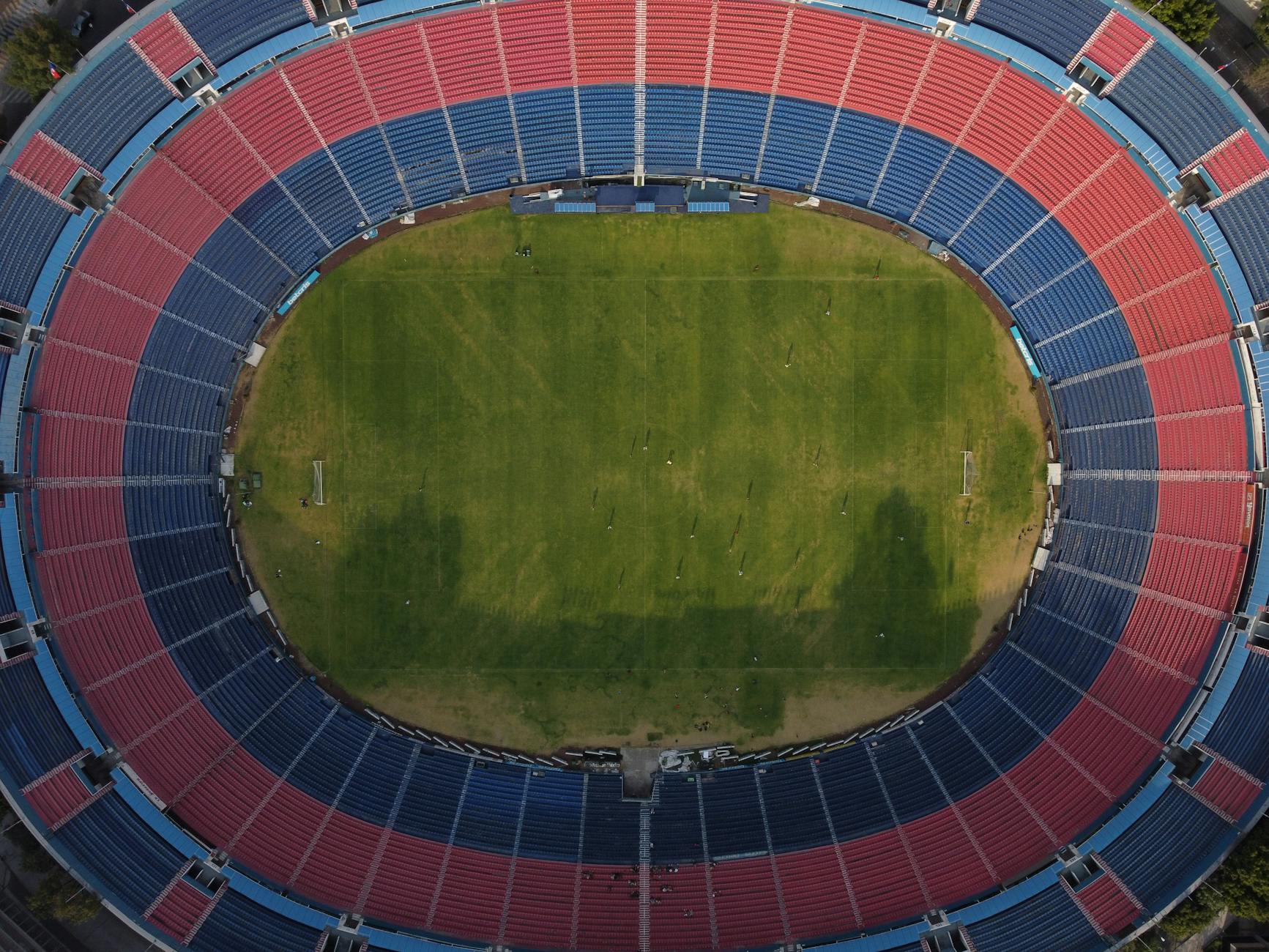
Photo by Israel Torres on Pexels
See the latest football analysis before the next major fixture update arrives.
Frequently Asked Questions
Q: What are the Champions League fixtures for 2026?
A: The 2026/27 Champions League league phase begins on 8 September 2026 and ends on 27 January 2027. Eight matchdays are scheduled across September, October, November, December, and January, followed by knockout play-offs in February 2027. Because qualifying begins earlier and dates may change, verify the exact fixture through UEFA before relying on a copied calendar.
Q: How many matches does each club play in the 2026 Champions League league phase?
A: Each club plays eight league-phase matches, with four at home and four away. Unlike the former group stage, the 36 participating clubs share one table rather than being separated into groups of four. The top eight advance directly to the round of 16, while teams ranked ninth through 24th enter the knockout phase play-offs.
Q: What is the difference between the Champions League league phase and knockout phase?
A: The league phase uses eight matches per club to create one 36-team table, while the knockout phase uses elimination ties. The top eight league-phase teams go straight to the round of 16, and positions ninth to 24th contest two-legged play-offs. Quarter-finals and semi-finals also use two legs, but the final is a single match.
Q: How can I check the correct local time for a 2026 Champions League match?
A: Start with the UEFA listing in Central European Time, then convert it using a reliable time-zone service and confirm it with an authorized broadcaster. A 21:00 CET match is generally 20:00 in the United Kingdom and 15:00 Eastern Time in September, although daylight-saving rules can affect exact conversions. Recheck the time during match week because broadcast schedules can change.
Q: Can Champions League fixtures in 2026 change after publication?
A: Yes, UEFA fixtures can change because of broadcast arrangements, domestic-calendar conflicts, stadium issues, security requirements, or administrative decisions. The date, kick-off time, and occasionally venue should therefore be treated as provisional until confirmed. Check UEFA and the relevant home club at least when booking travel, before match week, and on matchday.
Q: Where will the 2027 Champions League final be played?
A: The 2027 Champions League final is scheduled for 5 June 2027 at Estadio Metropolitano in Madrid, Spain. Atlético de Madrid uses the stadium as its home ground, and the venue previously hosted the 2019 final, when Liverpool defeated Tottenham Hotspur 2–0. Final arrangements remain subject to UEFA confirmation and operational updates.
Q: Can Stadium View guarantee a Champions League prediction?
A: No, Stadium View cannot guarantee a match result, scoreline, or betting outcome. Its role is to provide football-focused analysis covering tactics, player statistics, form, predictions, and tournament developments around the 2026 World Cup and other major competitions. Use those insights as research, verify fixture information independently, follow local gambling laws, and never stake money you cannot afford to lose.
Thank you for reading.
Stadium View · Editorial Archive · 2026